
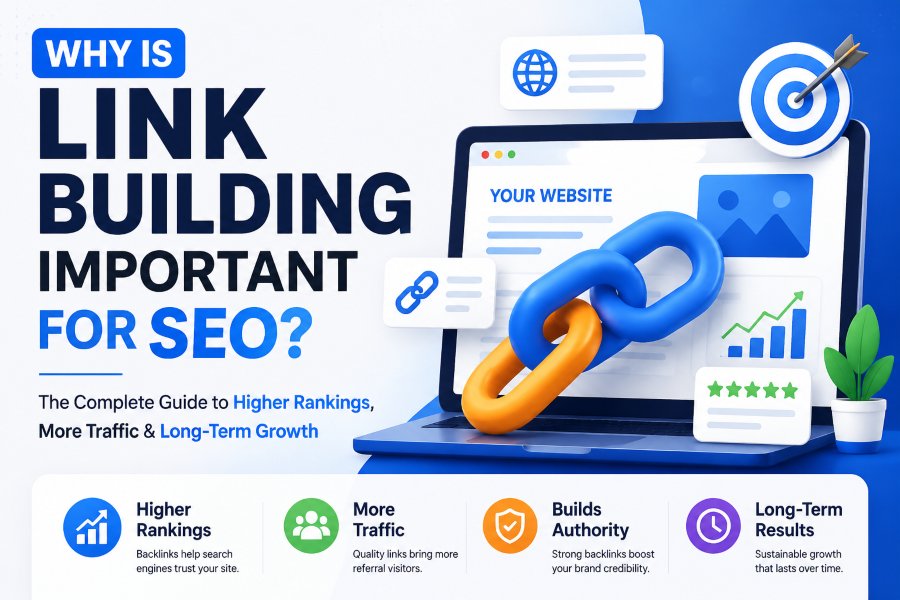
Search engines use hundreds of ranking factors to determine which websites appear at the top of search results. While content quality, technical SEO, and user experience are important, backlinks remain one of the strongest signals that help search engines understand website authority and trust.
Many website owners create valuable content but still struggle to improve rankings because they overlook one important part of SEO: link building.
So, why is link building important for SEO? Link building helps search engines discover your website, evaluate credibility, and understand that other websites consider your content valuable. When trusted websites link to your pages, search engines view those links as recommendations.
A strong link-building strategy can help increase organic rankings, bring referral traffic, improve brand visibility, and create long-term SEO growth.
In this guide, we will explain how link building works, why it matters, different types of backlinks, and effective strategies for earning quality links.
What Is Link Building in SEO?
Link building is the process of acquiring hyperlinks from other websites that point to your own website. These links are commonly known as backlinks.
A backlink works like a digital recommendation. When another website links to your content, it signals that your page contains useful information worth referencing.
For example, if a marketing website publishes an article about SEO strategies and links to your SEO guide, that backlink can help search engines understand that your content is relevant to the topic.
Link building focuses on earning valuable and natural links instead of simply collecting as many links as possible.
Modern SEO prioritizes:
- Quality of backlinks
- Relevance of linking websites
- Authority of referring domains
- Natural link placement
- User value
A few high-quality backlinks from trusted websites can be more powerful than hundreds of low-quality links.
Why Are Backlinks Important for SEO?
Backlinks are important because search engines use them as trust and authority signals.
When multiple reliable websites link to your pages, search engines see your website as a valuable resource.
Here are some major reasons backlinks matter:
- They improve search engine rankings.
- They increase website authority.
- They help search engines discover new pages.
- They generate referral traffic.
- They improve brand credibility.
- They support long-term organic growth.
A website with strong backlinks often has a better chance of competing for competitive keywords.
Link Building Helps Improve Search Rankings
One of the biggest reasons link building is important for SEO is its impact on rankings.
Search engines analyze backlinks as a measurement of website importance. Websites with strong backlink profiles often have higher authority compared to websites with fewer trusted references.
For example, two websites may publish similar content about digital marketing. The website with more relevant and trustworthy backlinks may have a better chance of ranking higher.
However, ranking success is not only about the number of backlinks. Search engines evaluate:
- Where the link comes from
- How relevant the website is
- The quality of the content
- The natural placement of the link
A relevant backlink from an industry-related website can provide much more SEO value than an unrelated link.
Backlinks Build Website Authority and Trust
Search engines want to show users reliable information. Backlinks help them identify websites that have earned credibility.
When respected websites reference your content, it creates a trust signal.
For example:
- A technology website linking to your software guide
- A marketing publication linking to your SEO research
- An industry blog mentioning your expert article
These links show that your website provides valuable information within your industry.
Over time, earning authoritative backlinks can strengthen your website reputation and improve your ability to rank for competitive searches.
Link Building Helps Increase Organic Traffic
Backlinks do not only help rankings. They can also send direct visitors to your website.
When users read an article on another website and click a link to your content, that creates referral traffic.
High-quality referral traffic can lead to:
- More website visitors
- More engagement
- More leads
- More conversions
For businesses, backlinks can become a valuable source of targeted traffic because visitors are already interested in related topics.
Backlinks Help Search Engines Discover Content
Search engines use links to crawl and discover websites.
When another website links to a new page on your website, search engine crawlers can find and index that content more easily.
This is especially helpful for:
- New websites
- New blog posts
- Important service pages
- Updated resources
A strong internal linking structure combined with external backlinks helps search engines understand your website better.
You can also improve SEO performance by learning more about how to optimize a website for local SEO and building a complete search strategy.
Quality Backlinks vs Quantity of Backlinks
Many people believe successful link building is about getting the highest number of backlinks. However, quality matters more than quantity.
A single backlink from a trusted industry website can provide more value than dozens of low-quality links.
A quality backlink usually comes from a website that has:
- Strong domain authority
- Relevant content
- Real audience
- Good reputation
- Natural editorial links
Low-quality backlinks from spam websites can harm your SEO performance.
Successful link building focuses on earning meaningful links that improve user experience and provide value.
Different Types of Backlinks
There are several types of backlinks used in SEO.
Editorial Backlinks
Editorial backlinks are naturally earned when websites reference your content because it provides useful information.
These are considered some of the most valuable backlinks.
Examples:
- Research studies
- Industry guides
- Expert articles
- Useful resources
Guest Post Backlinks
Guest posting involves creating valuable content for another website and including a relevant link back to your website.
When done correctly, guest posting can help:
- Build authority
- Reach new audiences
- Increase brand awareness
The focus should always be on providing valuable content rather than only acquiring links.
Resource Page Links
Many websites create resource pages that recommend helpful tools, guides, or articles.
Getting included on relevant resource pages can create valuable backlinks.
Business Directory Links
Local businesses can benefit from directory listings and business citations.
Examples include:
- Industry directories
- Local business directories
- Professional listings
These links can support local SEO efforts.
Effective Link Building Strategies
Building backlinks requires a strategic approach. Some effective methods include:
Create Link-Worthy Content
High-quality content naturally attracts backlinks.
Content types that often earn links include:
- Research reports
- Detailed guides
- Original data
- Case studies
- Industry statistics
- Helpful tutorials
When content provides unique value, other websites have a reason to reference it.
Publish Guest Articles
Guest posting remains an effective way to build relationships and earn relevant backlinks.
A successful guest post strategy includes:
- Choosing relevant websites
- Creating valuable content
- Avoiding spammy practices
- Building long-term relationships
The goal should be contributing useful information to the audience.
Build Relationships With Industry Websites
Relationship building plays an important role in modern SEO.
Connect with:
- Bloggers
- Business owners
- Industry experts
- Content creators
Strong relationships can lead to natural mentions, collaborations, and backlink opportunities.
Create Shareable Resources
People link to content that helps their audience.
Examples of link-worthy resources:
- Free tools
- Templates
- Checklists
- Research data
- Complete guides
Creating useful resources increases the chance of earning organic backlinks.
Use Competitor Backlink Analysis
Analyzing competitor backlinks can reveal new opportunities.
You can discover:
- Websites linking to competitors
- Content topics attracting links
- Industry websites accepting contributions
This information can help create a smarter link-building strategy.
Common Link Building Mistakes to Avoid
Not all backlinks improve SEO. Some practices can damage website performance.
Avoid:
- Buying large numbers of low-quality links
- Using spam websites
- Excessive exact-match anchor text
- Creating unnatural links
- Ignoring link relevance
- Focusing only on quantity
Search engines prioritize natural and valuable link profiles.
A successful SEO strategy combines quality content, technical improvements, and ethical link-building methods.
How Long Does Link Building Take to Show Results?
Link-building results are not immediate. SEO growth requires patience and consistent effort.
The timeline depends on:
- Website authority
- Competition level
- Quality of backlinks
- Content strength
- Industry difficulty
Some websites may notice improvements within a few months, while others require longer-term strategies.
Consistent link building creates sustainable SEO growth over time.
How Link Building Works With Other SEO Strategies
Link building works best when combined with other SEO activities.
A complete SEO strategy includes:
- Keyword research
- Quality content creation
- Technical SEO
- Internal linking
- User experience optimization
- Local SEO
- Performance tracking
For example, backlinks can increase authority, but optimized content helps convert that authority into rankings and traffic.
Businesses looking for complete growth strategies can explore professional SEO services to improve their online visibility.
How to Measure Link Building Success
Tracking results helps understand whether your link-building efforts are working.
Important metrics include:
- Number of referring domains
- Domain authority growth
- Keyword rankings
- Organic traffic
- Referral traffic
- Conversion improvements
SEO tools can help monitor backlinks and identify new opportunities.
Regular analysis allows businesses to improve their strategies and focus on methods that create real results.
Conclusion
Link building remains one of the most important parts of SEO because it helps search engines recognize website authority, trust, and relevance.
If you are wondering why is link building important for SEO, the answer is simple: quality backlinks help improve rankings, attract targeted traffic, build credibility, and support long-term online growth.
A successful link-building strategy is not about collecting unlimited links. It is about earning valuable connections from trusted websites through useful content, relationships, and ethical SEO practices.
When combined with strong content, technical optimization, and a complete SEO strategy, link building can help businesses achieve stronger visibility and sustainable search performance.
Frequently Asked Questions
Why is link building important for SEO?
Link building is important because backlinks help search engines measure website authority, improve rankings, increase visibility, and drive referral traffic.
How many backlinks does a website need?
There is no fixed number. The required backlinks depend on competition, industry, keyword difficulty, and the quality of existing links.
Are all backlinks good for SEO?
No. Quality and relevance matter more than quantity. Low-quality or spam backlinks may negatively affect SEO performance.
How long does link building take?
Link-building results usually take several months because search engines need time to evaluate authority improvements.
What is the best way to build backlinks?
The best methods include creating valuable content, earning editorial links, guest posting, building relationships, and creating useful resources.